States Turn Away From Weight-Loss Drugs Despite Trump Administration Push to Lower Prices

Despite the Trump administration reaching price-reduction agreements with manufacturers of weight-loss drugs like Wegovy and Zepbound, most states are pulling back from Medicaid coverage of GLP-1 drugs for obesity. The shift is particularly striking because interest had been growing, with 16 state Medicaid programs covering these drugs as of October 1, up from 13 the prior year. However, budget pressures have triggered a reversal. North Carolina ended coverage citing funding shortfalls, and California, New Hampshire, and South Carolina announced they will end coverage on January 1. Michigan is restricting coverage to severely obese patients, while Pennsylvania, Rhode Island, and Wisconsin are considering similar restrictions. The retreat is happening across party lines and reflects a fundamental problem: while doctors and patient advocates argue the drugs save money long-term by reducing obesity-related diseases, states face immediate budget crises. It’s unclear whether the Trump administration’s negotiated price deals will actually reduce costs for state programs, leaving states to conclude they simply cannot afford the drugs despite their potential benefits.

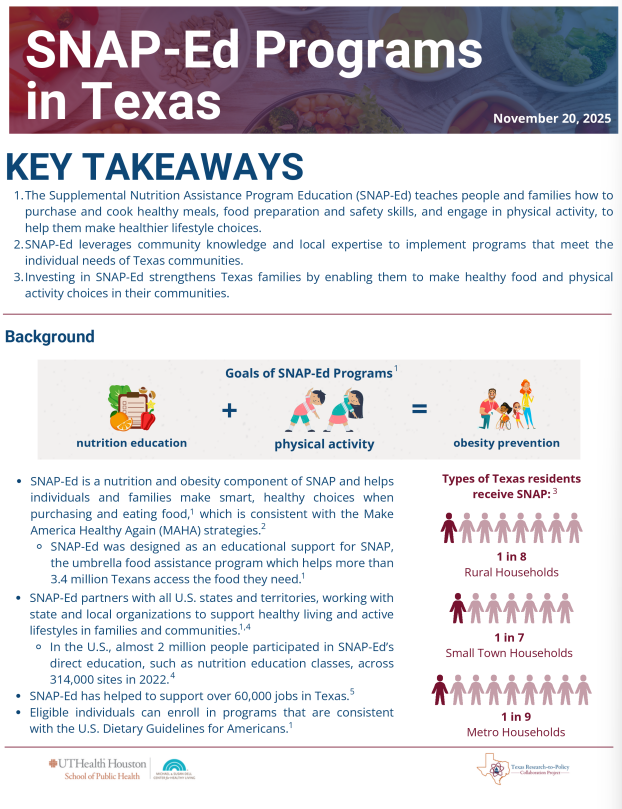
SNAP-Ed Programs in Texas

The 2025 SNAP-Ed Programs in Texas report highlights the critical role of the Supplemental Nutrition Assistance Program Education initiative in supporting healthier eating and active living across Texas communities, particularly among families with limited resources. SNAP-Ed provides nutrition education, food preparation and safety skills, breastfeeding support, and physical activity promotion, all aligned with the U.S. Dietary Guidelines for Americans and the Make America Healthy Again strategy.

Health Rounds: High Blood Pressure Among Children Doubles; Obesity May Be Driving Trend

New data show that the prevalence of high blood pressure among children has doubled in recent years, raising serious concerns about early cardiovascular risk. Elevated blood pressure in childhood is associated with a greater likelihood of hypertension and heart disease in adulthood. Researchers point to rising childhood obesity rates as a key driver of this trend, as excess weight places additional strain on the cardiovascular system. The findings emphasize the importance of routine blood pressure screening, early lifestyle interventions, and obesity prevention efforts in pediatric care settings.